The journey has dependent stages
Instructions, consent requests, and dates reach the patient through separate channels.
Interactive demonstrator
Patient journey portalFor the owner, operations manager, and coordinator of a private clinic. The demonstrator shows an example 12-step configuration for instructions, consent, tests, results, visits, documents, and follow-up. Within the offered scope, qualification and result interpretation remain with an authorized doctor.
Medical decision → authorized doctor
Instructions, consent requests, and dates reach the patient through separate channels.
Tests and documents arrive as PDFs, emails, or records in another system.
Coordinators call and write to explain status, collect missing items, or prompt the next step.
The patient calls or submits a form and receives instructions separately.
Required items arrive through different channels and systems.
A coordinator checks completeness before the doctor’s decision.
The clinic communicates next steps through calls and messages.
The team creates a patient view and assigns the agreed journey.
The patient sees the active stage, instructions, and items required to move forward.
A coordinator or agreed integration updates the visible state of consent, tests, results, visits, documents, or payments and records the source of the change.
A missing item or deadline may trigger an agreed reminder or escalation in the target system; the demonstrator shows this pattern.
The doctor makes the decision while the portal records state and presents the next instructions and follow-up.
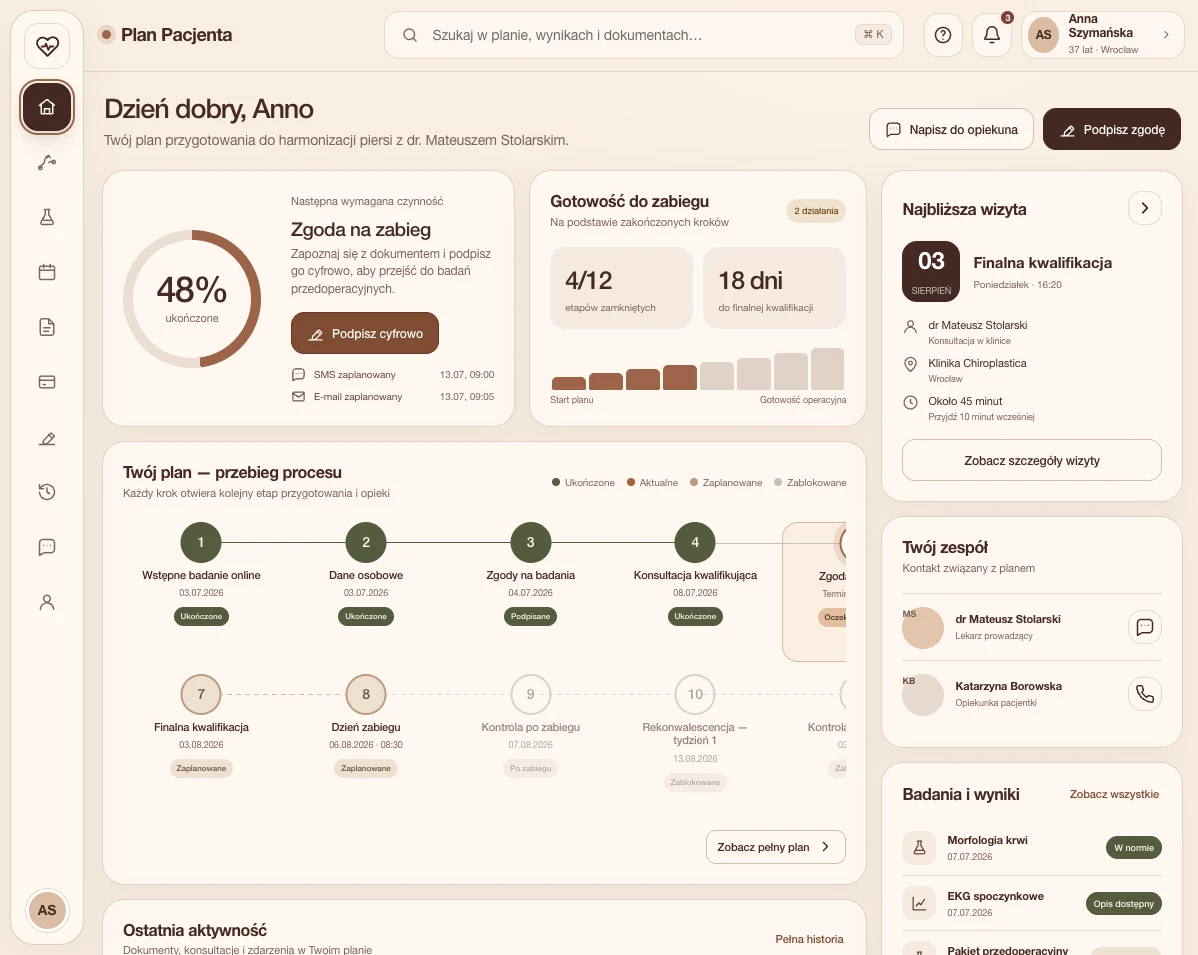
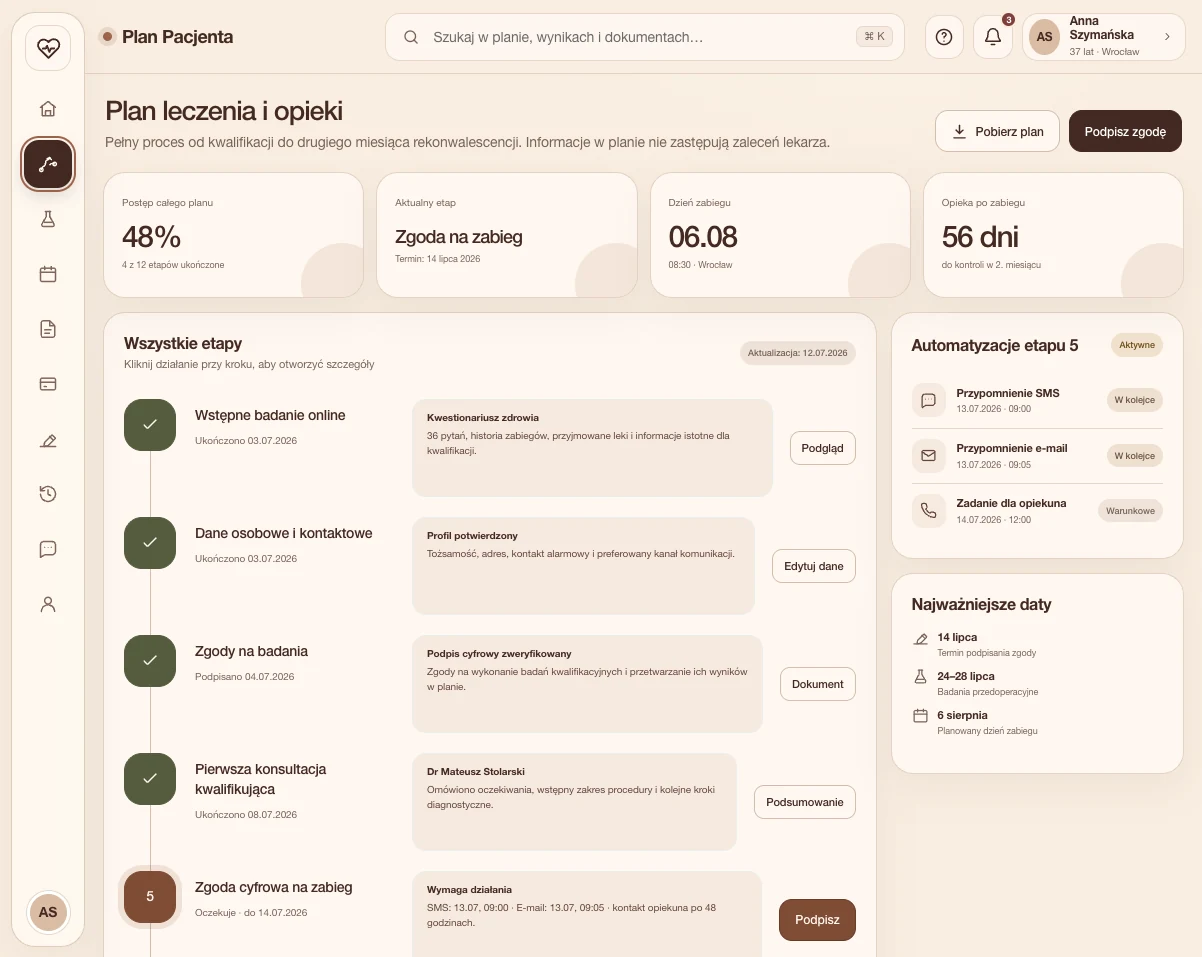
The dashboard shows their position in a 12-step journey.
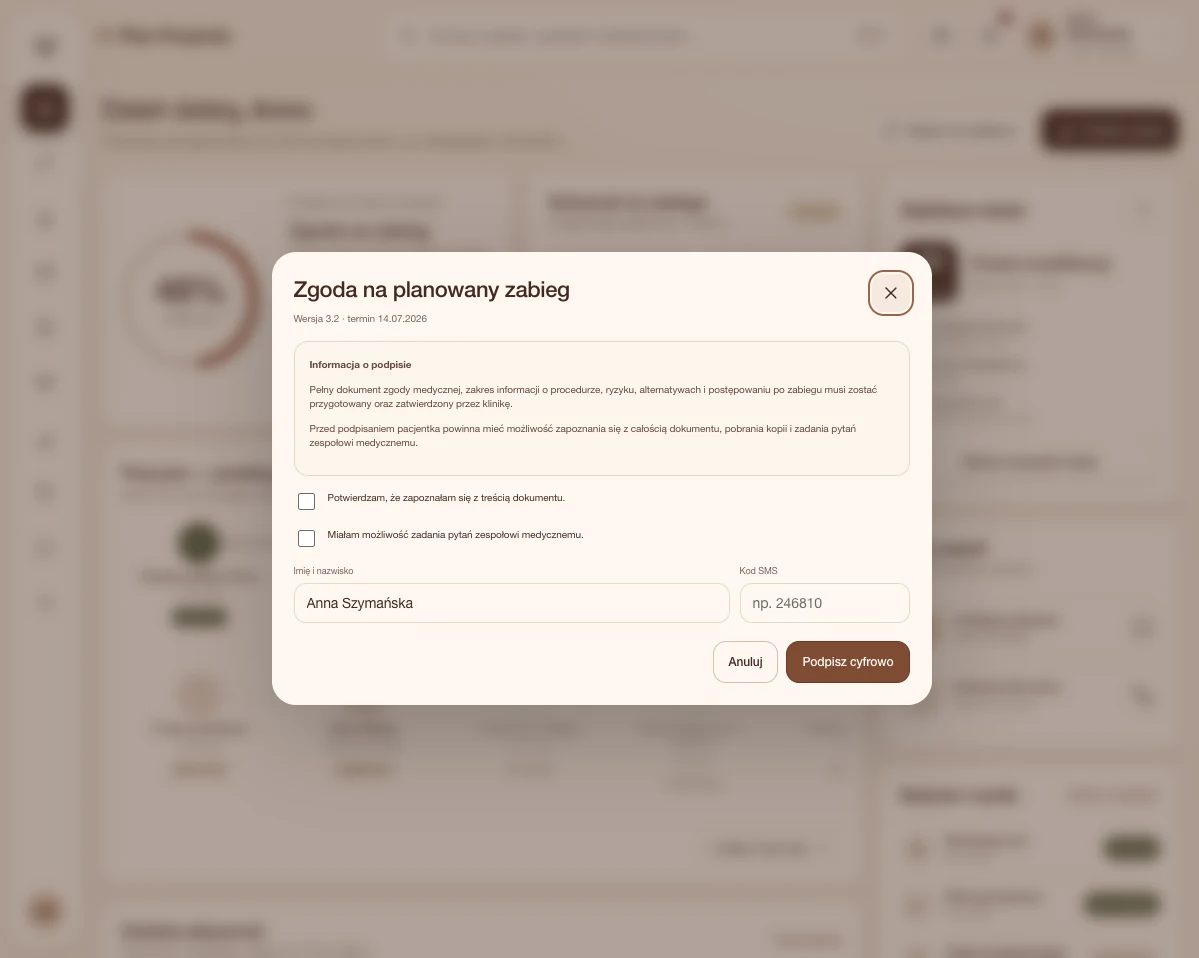
The demonstrator shows consent transitions without e-signature.
Tests, results, and documents are grouped by visible state.
Visits appear in the context of the journey rather than as an isolated calendar.
The UI model places payments beside other process elements.
The demonstrator shows reminder, escalation, history, and message patterns for exceptions.
The model covers patient data, 12 stages, and states for consent, tests, results, visits, documents, and payments.
Backend, authentication, roles, e-signature, SMS, and HIS/EMR connections require separate scope and validation.
Missing documents go to a coordinator; within the offered scope, qualification and result interpretation remain with a doctor.
The pilot compares the same workflow and keeps quality guardrails visible.
Status, timing, or missing-item calls and messages / patients in the cohort.
Coordinator time spent checking completeness and reminding / patient.
Missing items found after coordinator readiness confirmation / all journeys handed forward after that confirmation.
Map one journey, roles, decisions, and data sources.
Measure contacts, manual work, and late missing items.
Adapt stages, states, and messages.
Design backend, roles, and selected connections.
After privacy, security, and responsibility gates, run a bounded journey with manual fallback and doctor review.
Expand after reviewing KPIs, exceptions, and clinic-specific requirements.
We will define states, human decisions, exceptions, data, and the scope of a safe pilot from first contact to post-treatment care.
Start with the workflow