Tool we made

E-commerce platform for selling website templates

Description

We designed and built Template Market as a complete sales platform for digital web products, connecting discovery, purchase, licensing, delivery and post-purchase service.

Product

Template Market / DGBA Studio

Year

2026

Scope

Strategy, UX/UI, full-stack development, e-commerce, SEO, cloud infrastructure

Live product

Template Market / DGBA Studio

Open live ↗
What we built

A complete digital product built around real operations.

Template Market was created as a curated marketplace for original HTML/CSS website templates. It is a single-studio model in which offer quality, publishing, sales and customer relationships remain under one brand, while the architecture is ready to expand into a multi-creator marketplace.

The outcome is not a gallery with product cards. It is an operating sales system that takes a buyer from finding the right template and viewing a real hosted preview to payment, license assignment, secure file delivery, invoice access and independent account service.

01

Turning files into a repeatable product

We converted source files that would normally be prepared and sent manually into standardized products that can be presented, sold and delivered repeatedly. Each release connects a catalog record, a real preview, a customer package, a commercial license and a checkout product.

This gave the studio a scalable revenue channel: one well-prepared release can generate further sales without creating the same operational workload each time. The system also supports single products and an All-Access offer covering the current and future catalog.

  • Central product catalog with categories, technology, pricing and use cases
  • Single-product and All-Access sales models
  • Controlled publishing and withdrawal without rebuilding the platform
  • Data model prepared for bundles, new formats and multiple creators

Business result: a repeatable product and revenue model that can grow without proportional growth in manual delivery work.
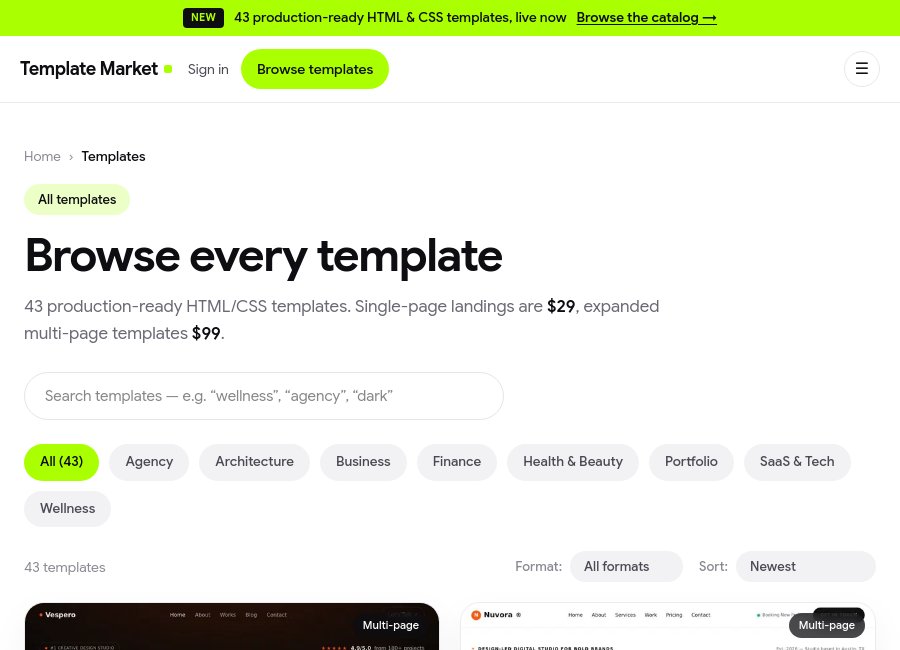
E-commerce platform for selling website templates — Turning files into a repeatable product 1
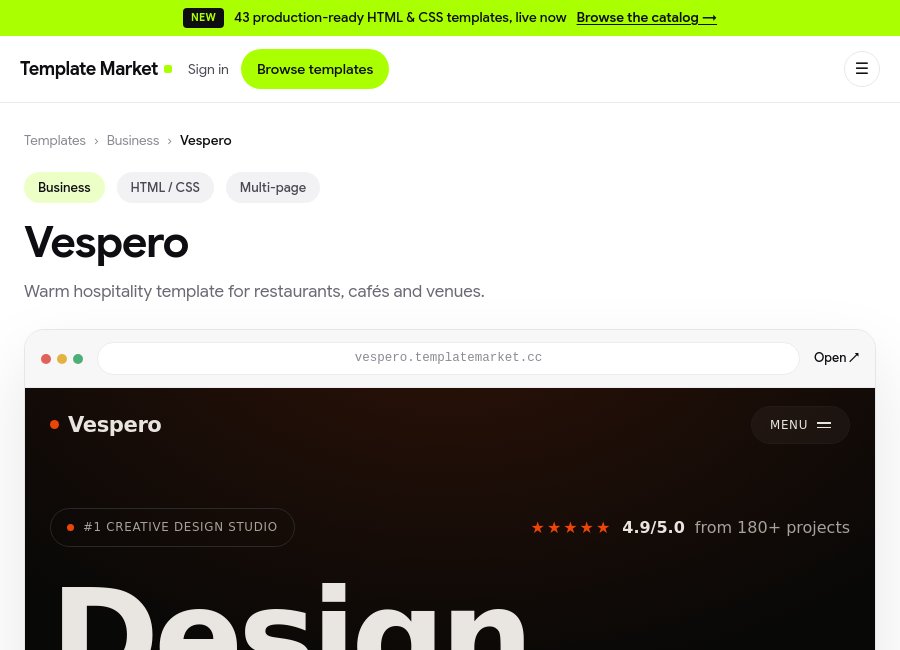
E-commerce platform for selling website templates — Turning files into a repeatable product 2
02

Catalog, search and real product previews

We built a structured catalog with dedicated product pages, search, filtering and sorting. Buyers can understand the purpose, format, included pages, technology and license before entering checkout instead of browsing an unstructured library of files.

Each template has a real hosted preview on a dedicated address. Preview environments are separated from the store, so publishing a demonstration does not put the sales application at risk, while a visible purchase context leads the visitor back to the canonical product page.

  • Search and filtering by category, format, price and intent
  • Dedicated product pages with license and technology details
  • Production-hosted previews in EN and PL where available
  • Release checks connecting preview, package and catalog entry

Business result: faster product selection, fewer pre-sale questions and more confidence because the buyer can inspect the real experience before purchase.

03

Checkout, payment confirmation and licenses

The platform supports purchases of individual templates and the All-Access package. An order is created before checkout, then reconciled after payment using provider-side verification rather than treating a webhook as the only source of truth.

Payment status, the actual amount paid and license assignment are handled as separate business states. Atomic updates prevent duplicate licenses, duplicated e-mails and inconsistent order processing when several callbacks arrive at the same time.

  • Hosted easy.tools checkout integrated with the platform order flow
  • Independent payment verification and idempotent fulfillment
  • Commercial licenses for single products and the entire catalog
  • Support for discounts, success return paths and transaction records

Business result: sales can run 24/7 without manual transfer confirmation, file preparation or license assignment.

04

Secure delivery and customer self-service

Source packages are stored privately and are never exposed as permanent public links. Download access is granted only after checking the buyer's entitlement and is issued through short-lived tokens that reduce uncontrolled sharing.

The customer account includes purchase history, owned products, repeat downloads and invoices. Registration, e-mail verification, password reset and protection against repeated failed logins create a complete post-purchase experience instead of moving support back to e-mail.

  • Private file storage with authorization before every delivery
  • Short-lived download tokens and durable purchase entitlements
  • Order history, repeat downloads and invoice access
  • Daily independent replication of release packages to backup storage

Business result: lower support cost per order, better protection of commercial files and customer access that scales with sales volume.

05

Content, SEO and machine-readable discovery

We designed category and product pages with individual metadata, FAQ content, internal linking and structured data. The platform also includes a governed editorial model for expert articles with authorship, review and revision control.

Sitemaps, canonical URLs, robots policies and machine-readable product resources help search engines and AI agents understand the offer. An API catalog, Markdown views and llms.txt expose useful facts without replacing the customer-facing experience.

  • Product, category and article SEO with structured data
  • Editorial workflow based on review and real catalog evidence
  • Sitemap, canonicalization and internal-link architecture
  • API catalog, Markdown resources and agent discovery files

Business result: the platform can build organic demand and expert authority in addition to converting paid traffic.

06

Cloud architecture, reliability and security

Template Market runs as a Next.js application on Cloudflare Workers, with D1 for catalog, users, orders, licenses and content, and R2 for private files, invoices and assets. Product previews, the sales application and private delivery storage are separated into independent components.

The implementation includes abuse protection for authentication and forms, staging for content, database exports, file backups and recovery paths. Separate deployments reduce the chance that a preview or content change affects checkout or customer delivery.

  • Next.js App Router deployed to Cloudflare Workers
  • Cloudflare D1 data layer and private R2 object storage
  • Separated application, preview and delivery components
  • Backups, staging, access controls and recovery procedures

Business result: a digital product platform designed for revenue, access and operational continuity rather than a one-off visual prototype.

07

A publishing process that protects quality and revenue

Every product follows a controlled release path. The team prepares the template, validates the release structure, publishes and checks the live preview, creates and replicates the customer package, and only then connects the catalog entry with checkout.

The same model can be applied to courses, premium reports, member libraries, licensed documents, plugins and other digital products where selling an unfinished or inaccessible release creates direct reputational and revenue risk.

  • Release validation before publication
  • Preview and customer package verified as one product
  • Backup readiness checked before the catalog goes live
  • Sales publication separated from build and content preparation

Business result: fewer failed releases and a repeatable operating standard for expanding the catalog safely.

Build with DGBA

Need a platform built around your offer and operations?

We connect strategy, UX/UI, development, integrations and launch in one delivery team.

Start a project